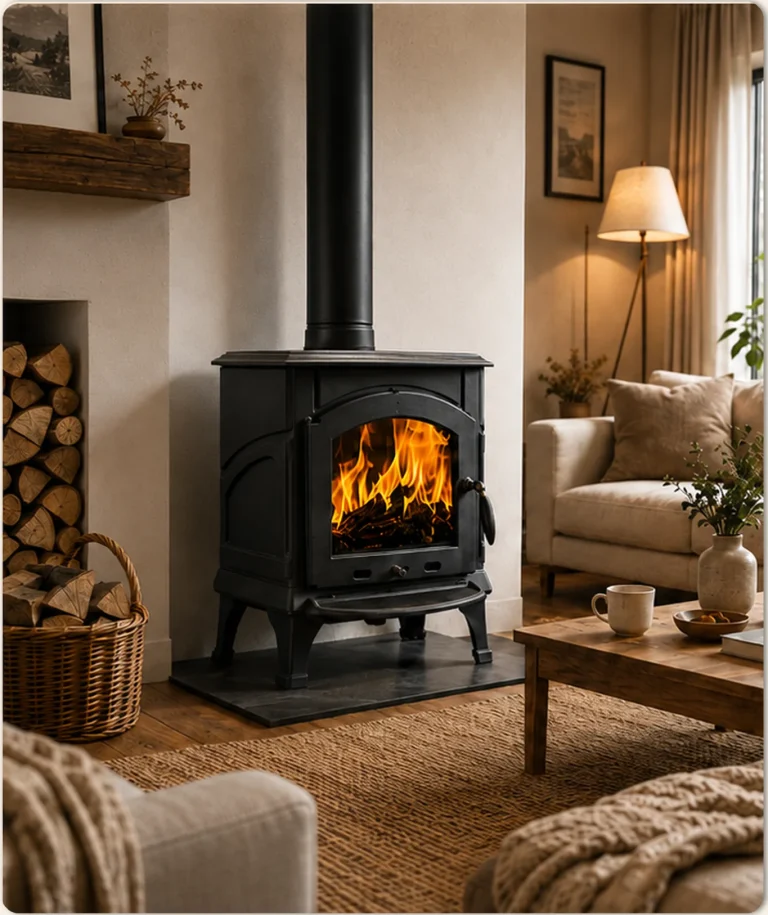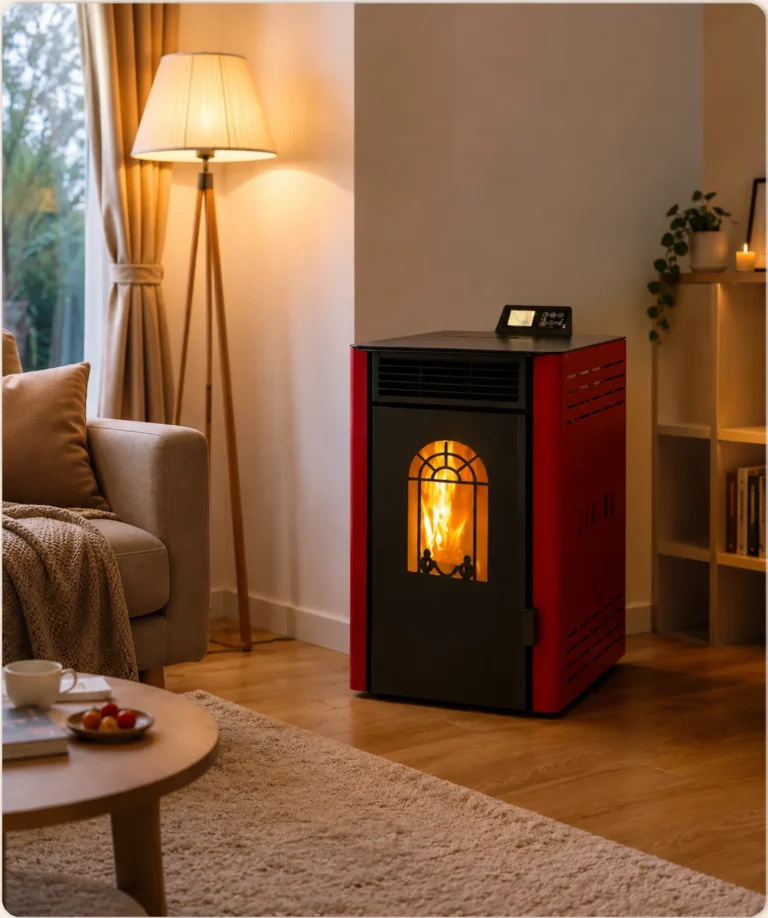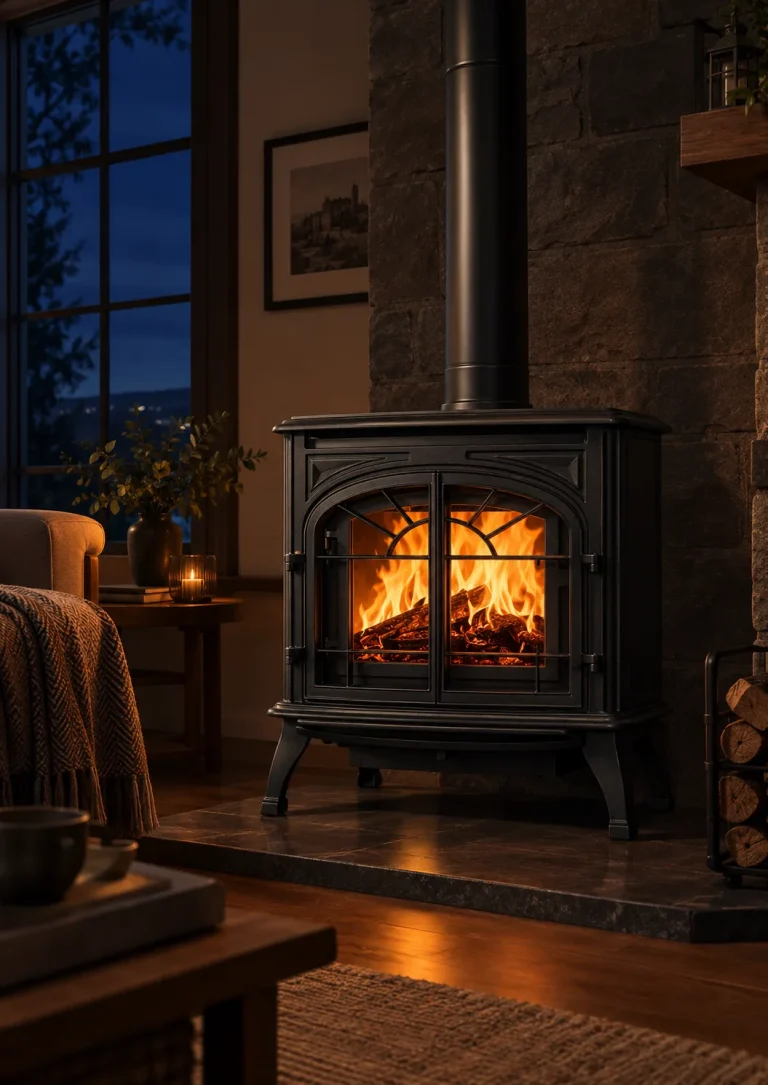
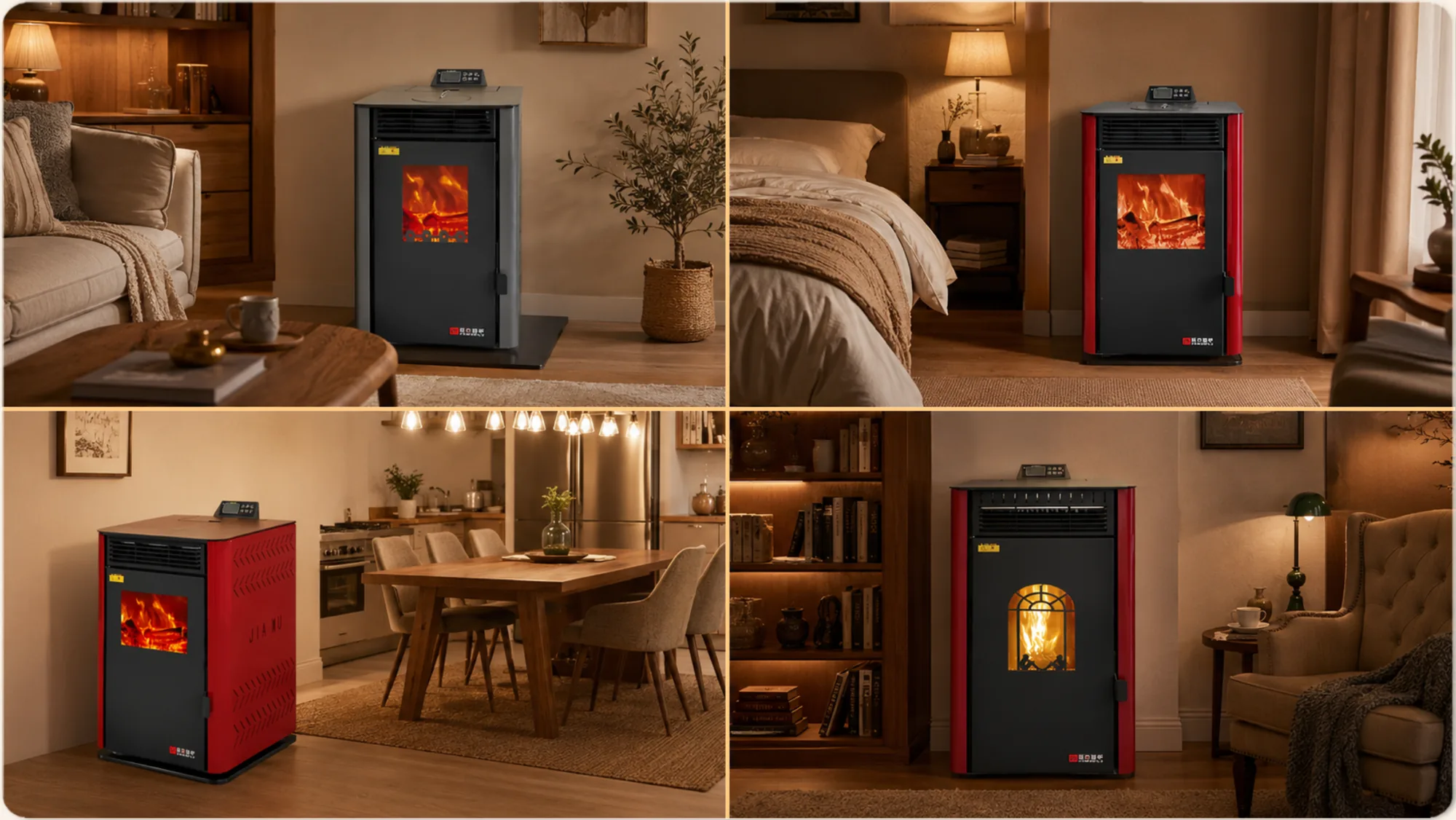
Many European and North American distributors import wood stoves from China to widen their range, protect margins or launch a private label. Done well, it gives you reliable stock and products built to your specification. Done badly, it gives you a container of stoves you cannot legally sell. This nine-step guide follows the order in which experienced importers actually work when they import wood stoves from China, from range planning to after-sales service.
In this article
We are a manufacturer ourselves, so we use CREPUS as an example in places. The steps apply to any supplier, and the questions are the ones we would ask if we were in your position.
Before you import wood stoves from China: the big picture
Three things decide success: the right products for your market, documents that prove compliance, and a supplier who delivers the same quality in every container. Price matters, but a cheap stove that fails an emissions check or arrives with cracked glass is the most expensive stove in your warehouse.
It also helps to be honest about your own resources. If you import wood stoves from China, someone in your team has to manage samples, documents, artwork, payments and shipping schedules. Budget that time from the start, or work with a supplier who takes on more of the coordination for you.
Step 1: Define your range and target market rules
Start with your customers, not with a catalogue. Which heating areas sell in your region? Do buyers prefer cast iron or steel, freestanding or inset, logs or pellets? A compact range of eight to twelve models covering 50–200 m² is easier to stock and train than a long list.
At the same stage, list the rules in each country you will sell into: EU Ecodesign, CE marking, national schemes in Germany or France, smoke control rules in the UK or EPA certification in the US. These rules decide which models you can even consider. In the EU, the starting point is the Ecodesign Regulation (EU) 2015/1185; for the US, the EPA Burn Wise pages explain wood heater certification.
Step 2: Shortlist and verify manufacturers
Online marketplaces make it easy to find hundreds of stove sellers. The hard part is separating real factories from trading companies and small workshops. Both can be legitimate partners, but you need to know who actually builds your stove and who controls quality.
How to verify a stove factory
- Video call from the production floor: ask to see cutting, welding, painting and assembly live, not a prepared video.
- Factory audit: visit yourself or hire a third-party auditor to check processes, equipment and quality control.
- Export history: ask which markets they already ship to and what documents those buyers required.
- Documents: business licence, export registration, test reports and sample manuals.
- Communication: clear, fast answers from someone who understands stoves, not just sales.
A good sign is a supplier who asks you questions back: which market, which flue standard, which language for manuals. That shows they have exported before and know what can go wrong. Distributors who import wood stoves from China successfully often keep two qualified suppliers, so one bad season does not stop the business.
Step 3: Request samples and evaluate them properly
Never skip samples. A photo cannot show weld quality, gasket fit or how a door closes. Order one or two key models and test them as your customers will: light them, burn them, open and close the door fifty times. Many suppliers, including CREPUS, credit the sample cost against the first container.
| Check | What good looks like | Warning signs |
|---|---|---|
| Welds | Even, continuous seams, cleaned spatter | Porous or uneven welds, grinding marks |
| Gaskets | Seated firmly in their channel, even pressure | Loose rope, gaps, glue residue |
| Door alignment | Closes smoothly, latch engages without force | Door rubs, sags or needs lifting |
| Glass | Ceramic glass, clean edges, secure clips | Chipped edges, rattling, ordinary glass |
| Coating | Uniform heat-resistant paint, no runs | Thin patches, bubbles after first burn |
| Firebox lining | Tight-fitting refractory or vermiculite panels | Cracked panels, wide gaps, loose fit |
| Air controls | Primary and secondary air move freely | Stiff or loose levers, unclear marking |
| Packaging | Pallet, foam, reinforced carton | Thin carton, no fixing to pallet |
Write down what you find and share it with the supplier. Their reaction to a list of faults tells you as much as the sample itself. Keep the approved sample in your warehouse as the reference for future orders. When you import wood stoves from China repeatedly, a signed-off golden sample is the simplest way to settle any later quality discussion.
Step 4: Collect compliance documents for each market
This is the step that most often goes wrong when distributors import wood stoves from China for the first time. A stove may be well built and still be unsellable without the right paperwork. In the EU, you will normally need test reports from a notified body or accredited laboratory, a Declaration of Performance, CE marking and the Ecodesign product information.
Each document must name the exact model you are buying. Our detailed guide to ecodesign wood stove rules in the EU, UK, Germany, France and the US explains what each market asks for. For CREPUS, test reports and declarations for relevant standards (e.g. EN 13240, EN 13229, EN 14785) are available on request for qualified models.
Step 5: Decide on OEM and branding
You can sell the factory’s own brand or build your own. Private label gives you control of pricing and a brand customers remember, but it adds decisions: logo, colour, door design, handles, legs, packaging and manuals in your language. Our OEM and private label process shows what can be customised.
Remember that changes to the firebox, air system or door can affect test results. Cosmetic changes such as a RAL colour or a logo are usually simple; structural changes need a discussion about testing before you commit. Allow extra weeks for artwork approval; a wrong logo on a rating plate is an expensive correction once production has started.
Step 6: Plan the order, MOQ and container
Most factories set a minimum order quantity per model, but many accept mixed containers for trial orders. A mixed container lets you test several models in your market without tying up too much cash. Ask for the MOQ per model and per container, and whether colours or OEM options change it.
How many stoves fit in a container?
There is no single answer. It depends on each stove’s dimensions and weight, the size of the pallet and carton, whether pallets can be stacked, and the mix of models. Ask the supplier for a loading plan based on your exact order. Heavy cast iron models may reach the weight limit before the container is full. Lighter steel and pellet stoves usually fill the space first, so mixing them with cast iron models can make better use of each container.
Seasonality
Stove sales peak in autumn and early winter. With production lead times and ocean transit, importers who want stock in the warehouse for September usually place orders by early summer. Standard CREPUS models usually ship 30–45 days after deposit, but busy periods fill factory schedules quickly. When you import wood stoves from China for the season, add transit, customs clearance and inland delivery, then work backwards to your order date. Leave a buffer for samples and document checks on any new model.
Step 7: Agree payment terms
The most common arrangement when you import wood stoves from China is a deposit by bank transfer (T/T) when the order is confirmed, with the balance paid before shipment, once inspection is complete. The exact split is negotiable and often depends on order size and how long you have worked together.
Other tools exist. Letters of credit give more protection on large orders but add bank costs and paperwork. Some online platforms offer trade-assurance-style payment protection. Whatever the method you choose to import wood stoves from China, make sure the proforma invoice states the model, specification, quantity, packing, delivery terms and timeline clearly.
Step 8: Pre-shipment inspection
Inspection before the balance is paid is your last chance to fix problems cheaply. Ask what the factory checks itself and how it reports. At CREPUS, every stove is inspected before shipment and the buyer receives photo reports. For extra assurance, you can appoint a third-party inspection company. Many importers do this on the first orders and switch to factory reports once trust is established.
- Agree the inspection checklist in writing before production starts.
- Request photo or video reports of finished stoves, packing and loading.
- Check rating plates, labels and manuals against your approved samples.
- Book third-party inspection early if you want an independent check.
- Release the balance only once results are confirmed.
Step 9: Shipping, customs and after-sales
Agree the Incoterms on the proforma invoice. Under FOB, the supplier loads the goods at the Chinese port and you organise sea freight. Under CIF, the supplier also pays freight and insurance to your port. Under DDP, the supplier handles delivery including import duties, which is convenient but harder to verify. For a first shipment, FOB or CIF with your own freight forwarder and customs broker often gives you the most control and the clearest costs.
Customs classification decides the duty rate. Stoves of iron or steel are often classified under heading 7321, but the exact code depends on construction and fuel, and duty rates vary by country. Confirm the HS code with your customs broker before the first order, not when the container arrives. Ask also about any import controls, market surveillance checks or product registration that apply when you import wood stoves from China into your country.
After-sales: spare parts and training
A stove range lives or dies on service. Order spare parts with the first container: gaskets, glass, grates, vermiculite panels and, for pellet stoves, electronics such as control boards and igniters. Ask the supplier for exploded drawings and part numbers, and for training material your installers can use. A supplier that can ship parts quickly by courier or with the next container protects your reputation. Train your dealers on installation, first lighting and basic troubleshooting before the season starts, so small issues do not become returns.
Common mistakes when you import wood stoves from China
- Choosing a supplier on price alone, without a video call or audit.
- Ordering a full container of an untested model instead of starting with samples.
- Accepting test reports that name a different model or brand.
- Ordering too late for the heating season.
- Paying the balance before seeing inspection results.
- Forgetting spare parts until the first warranty claim arrives.
Each of these mistakes is avoidable. Importers who import wood stoves from China year after year treat the first season as a learning order, then refine the range, the paperwork and the logistics with each new container.
A checklist to import wood stoves from China with confidence
| Step | Key output |
|---|---|
| 1. Range and market rules | Model list and compliance requirements per country |
| 2. Supplier verification | Audit or video-call notes, documents on file |
| 3. Samples | Completed evaluation checklist |
| 4. Compliance | Test reports, DoP, CE label, manuals |
| 5. OEM | Approved branding and packaging artwork |
| 6. Order plan | MOQ, loading plan, delivery date |
| 7. Payment | Signed proforma with clear terms |
| 8. Inspection | Photo report or third-party report |
| 9. Shipping and service | Incoterms, HS code, spare parts stock |
If you plan to import wood stoves from China for the first time, start small: one mixed container, a handful of proven models and a full set of documents. Our wood stove and pellet stove collections and solutions for distributors and projects show what a starter range can look like.
Practical questions about MOQ, samples and lead times are answered on our FAQ page. When you are ready to discuss a specific range, contact our export team; we reply within one business day.
Frequently asked questions
Is it safe to import wood stoves from China?
It can be, if you verify the manufacturer, test samples, collect compliance documents for your market and inspect goods before paying the balance. Most problems come from skipping one of these steps. Start with a trial order or mixed container and build volume once quality and paperwork have proved consistent across several shipments.
What is a typical MOQ for wood stoves?
It varies by manufacturer and model. Many factories set a minimum per model but accept mixed containers for first orders, so you can try several stoves at once. CREPUS offers a low trial MOQ and mixed-model containers. Ask each supplier for MOQ per model and per container, and whether OEM options change it.
How long does it take to receive stoves from China?
Allow for production plus transit. Standard CREPUS models usually ship 30–45 days after the deposit, and ocean freight adds several weeks depending on route and port. Customs clearance and inland delivery take additional time. For the autumn season, most importers place orders by early summer to have stock in time.
Which documents do I need to sell imported stoves in the EU?
Normally test reports from a notified body or accredited laboratory, a Declaration of Performance, CE marking, Ecodesign product information and manuals in the local language. Some countries add national requirements, such as Germany’s 1. BImSchV. Make sure every document names the exact model you import and check the current rules with your authority.