The pellet stove vs wood stove decision is one of the most common questions European dealers now hear. Biomass heating has become a mainstream category, and many households compare both options in the same visit. For distributors, the question is no longer whether to offer pellet stoves, but how to position them next to traditional log stoves so that each customer leaves with the right product.
In this article
This guide covers how each appliance works, fuel and storage, running-cost drivers, convenience, electricity, installation, service revenue and regulation. Each section ends with what it means for the pellet stove vs wood stove conversation in your showroom. The guide closes with buyer personas, a comparison table and a practical way to build a balanced range.
How each stove works
The wood stove: manual, natural draught
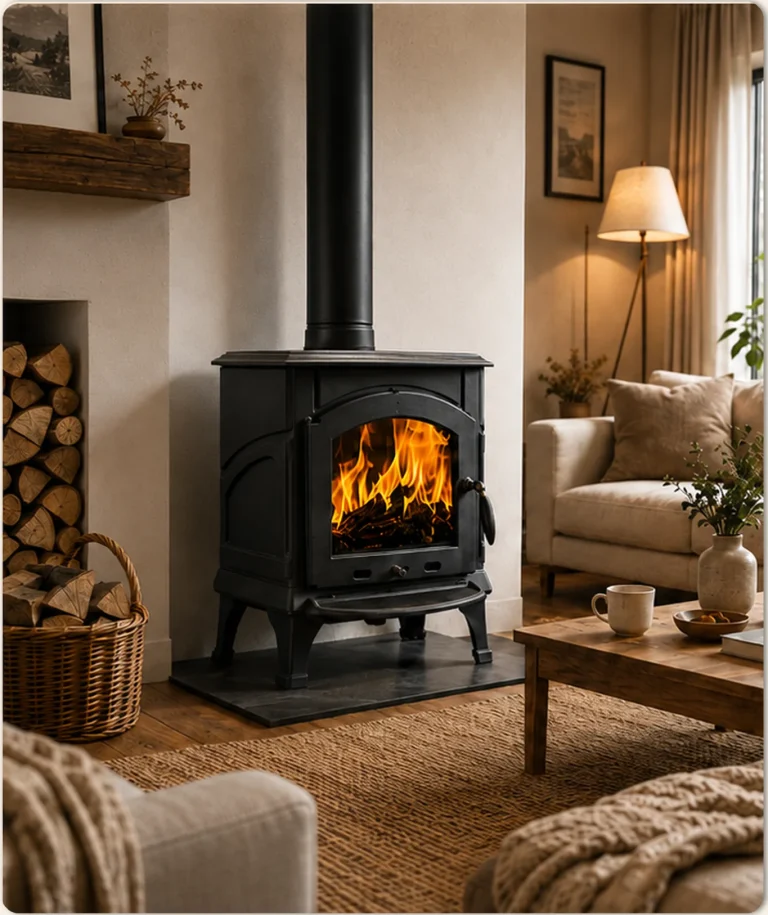
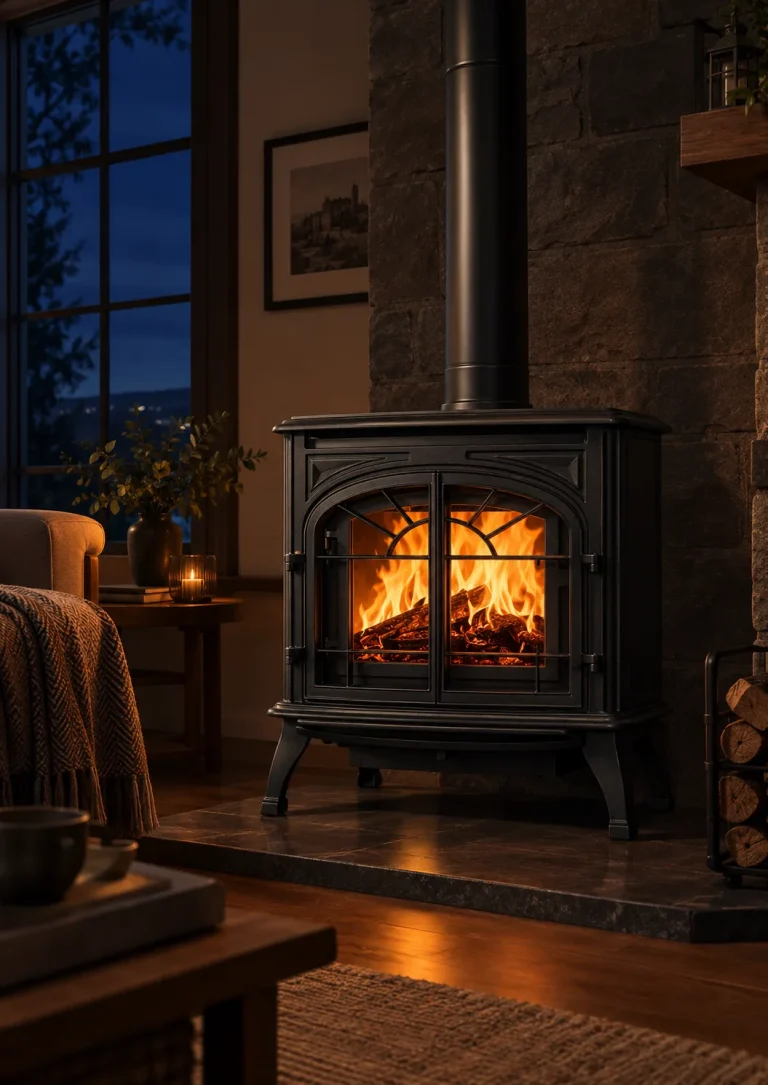
A wood stove burns split logs in a firebox lined with refractory material or vermiculite. The user lights the fire, loads logs by hand and sets primary and secondary air controls. Combustion relies on the natural draught of the chimney. An airwash system sweeps air across the glass to keep the view clear. There are no moving parts and, in most designs, no electricity at all.
The pellet stove: automated, fan-assisted
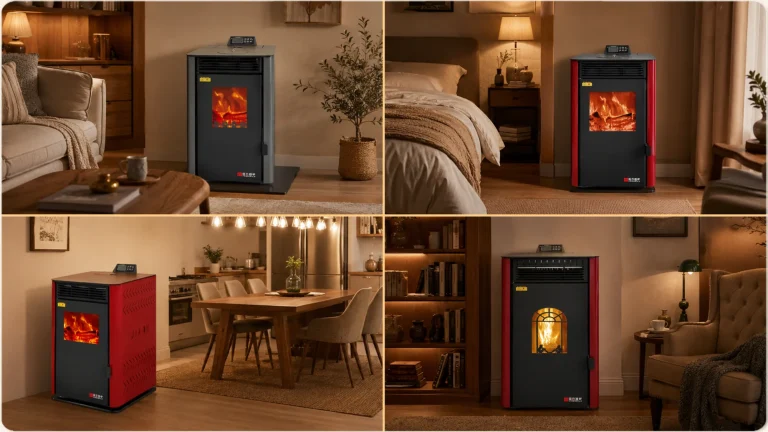
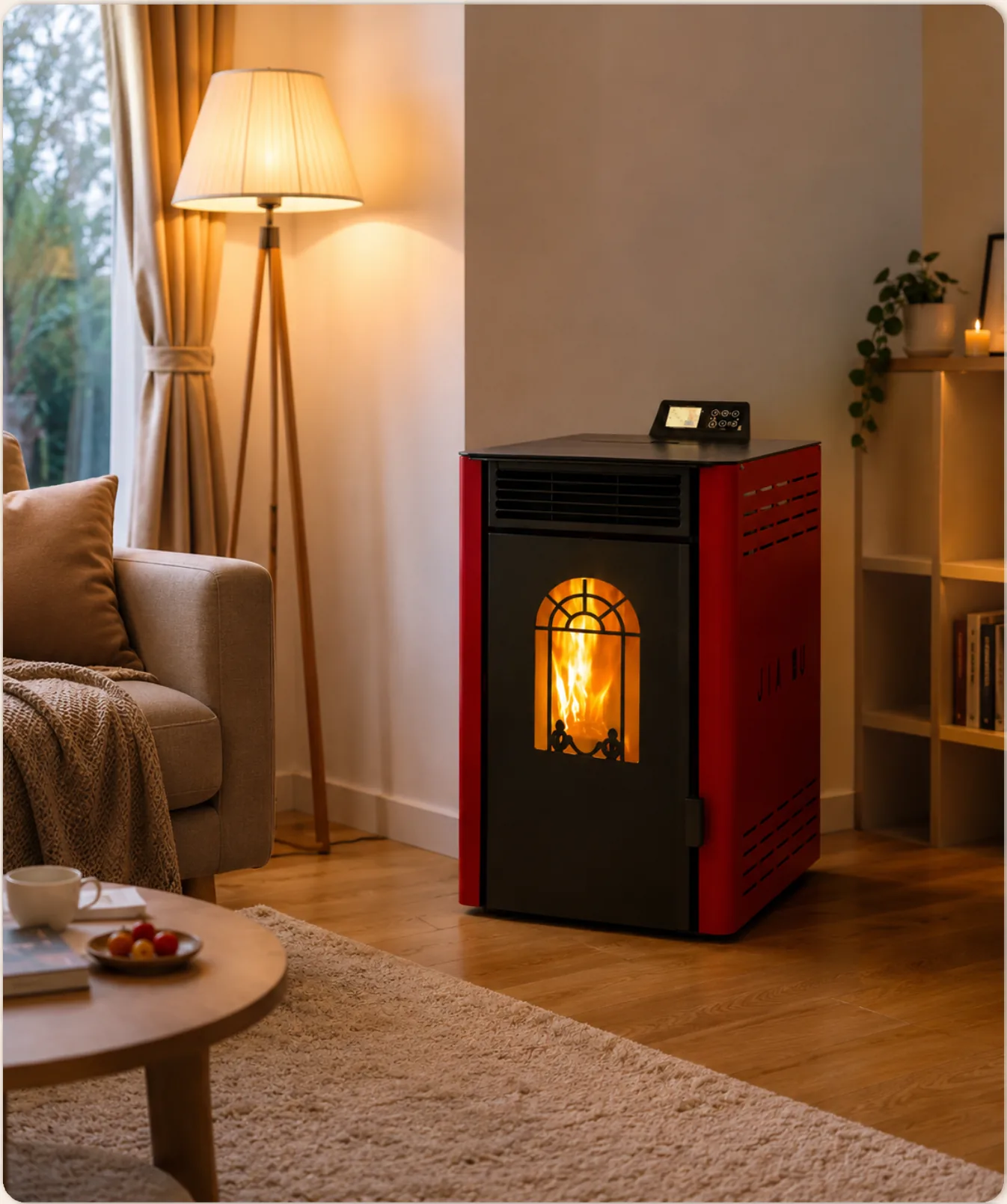
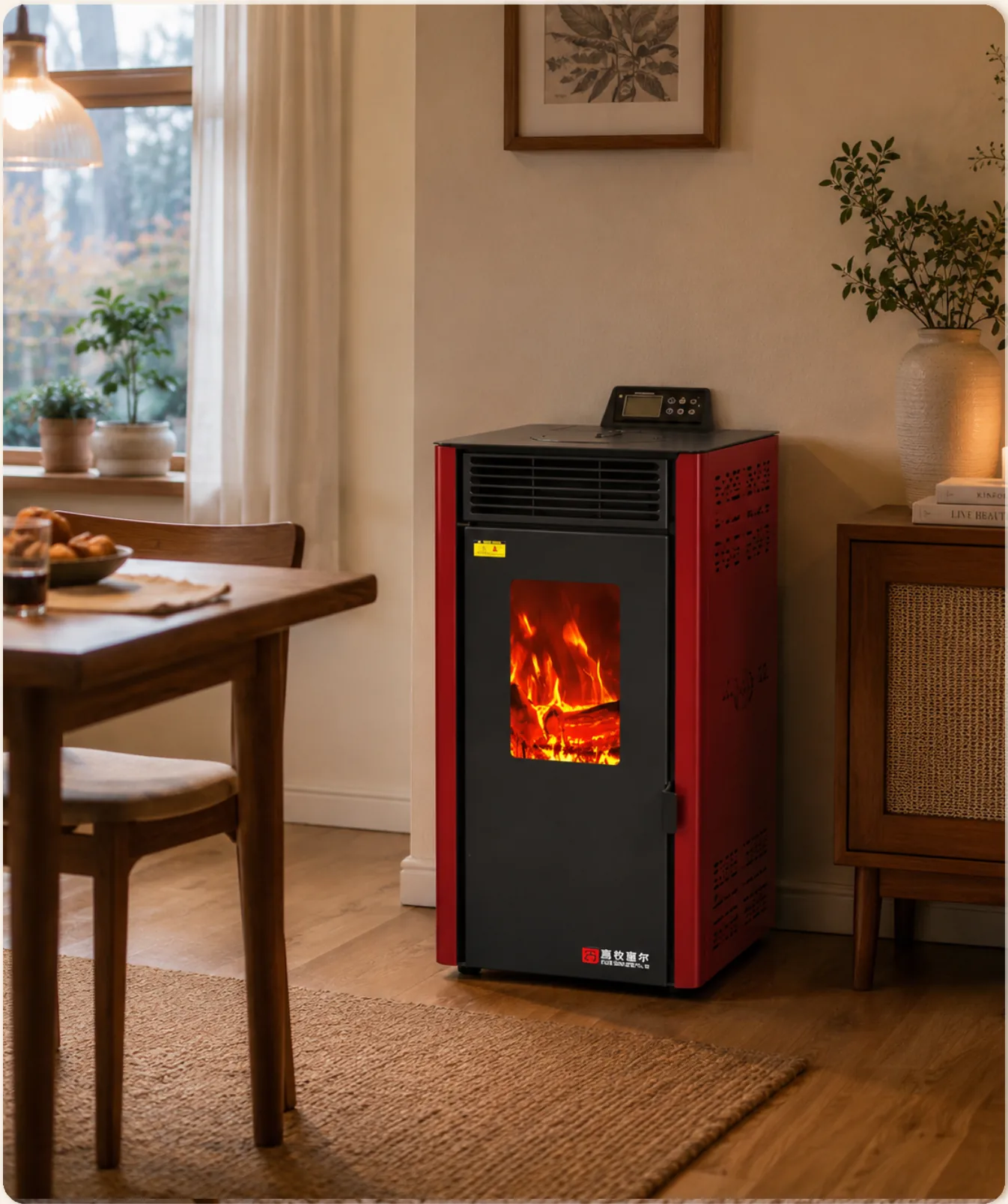
A pellet stove burns small, compressed wood pellets. They are stored in a built-in hopper and fed to a burn pot by a motorised auger. An electric igniter lights the fuel, a combustion fan controls the air supply, and a convection fan blows warm air into the room. A control board with a digital thermostat and timer adjusts the feed rate to hold the set temperature.
In short, the pellet stove vs wood stove contrast is automation versus atmosphere. One behaves like a small heating appliance; the other is a living fire that the user manages.
Fuel logistics and storage
Pellets: bags, pallets and ENplus A1
Pellets are usually sold in bags, commonly around 15 kg, or by the pallet. They are dense, clean to handle and store compactly in a dry utility room or garage. Quality matters: pellets with high ash or fines cause clinker in the burn pot, more cleaning and service calls. Most manufacturers, including CREPUS, recommend certified ENplus A1 pellets.
The ENplus certification scheme sets limits on moisture, ash, durability and other properties, and tracks the supply chain. Advising customers to buy certified pellets protects both the stove and your service team. Pellets must stay dry; damp pellets swell and crumble, which can block the auger.
Logs: space, seasoning and moisture
Logs need far more storage space, ideally a ventilated, covered woodstore. Freshly cut wood holds a lot of water and must be seasoned, often for one to two years depending on species and climate, before burning. Wet wood burns poorly, sooting the glass and building creosote in the flue. A moisture content of around 20 % or lower is widely recommended; a simple moisture meter is a useful add-on sale.
Customers with their own woodland or a reliable local log supplier see logs as a strength. Customers in apartments or urban homes with little space usually find pellets far easier to live with. Storage space alone often settles the pellet stove vs wood stove question before price is even discussed.
Running costs: pellet stove vs wood stove drivers
Customers always ask which is cheaper to run. There is no honest single answer, because prices vary widely by country, region and season. Instead of quoting figures, explain the factors that drive the pellet stove vs wood stove running cost so customers can do their own maths with local prices.
- Fuel price and source: bought pellets versus bought, self-cut or free logs.
- Fuel quality: wet logs or poor pellets waste heat and raise cleaning costs.
- Hours of use: a main heat source burns far more fuel than an occasional stove.
- Correct sizing: an oversized stove runs inefficiently at low output.
- Electricity: pellet stoves draw power for fans, auger and controls.
- Service: pellet stoves need regular cleaning and an annual service.
- Insulation: a well-insulated home needs less fuel with either stove.
Pellet consumption is predictable. Our pellet models list a hopper capacity of 13 to 32 kg and a fuel use from 1.3 to 3.5 kg per hour depending on model and setting. That lets a customer estimate daily use and multiply by the local pellet price. Log costs are less predictable but can be very low for households with their own wood. Framing the pellet stove vs wood stove running cost as a set of local variables keeps the conversation credible.
Convenience and automation
This is where pellet stoves win most clearly. A full hopper can run for many hours without attention: a 19 kg hopper at 1.5 kg per hour lasts roughly half a day. The digital thermostat holds the room temperature, and the timer can start the stove before the family wakes up or gets home. Ash is collected in the burn pot and ash pan.
Wood stoves ask more of the user: lighting, reloading every hour or so, adjusting the air and emptying ash. For many buyers this ritual is the point. For busy households, older users or holiday rentals, automation often decides the pellet stove vs wood stove choice.
Electricity dependence
A pellet stove needs mains electricity to run. If the power fails, the auger and fans stop and the stove shuts down safely. Some customers add a backup power supply, but that must follow the manufacturer’s guidance. In any pellet stove vs wood stove comparison, this is the clearest technical divide. A wood stove keeps heating during a power cut, which matters in rural areas and is a strong selling point for buyers who value independence.
Installation and flue differences
Wood stoves rely on natural draught. They need a suitable chimney or flue system of the right diameter and height, for example 152 mm or 200 mm on our wood models. Clearances to combustible materials, hearth requirements and air supply rules must be respected, and these differ from country to country.
Pellet stoves use a fan to push flue gases out, so they typically connect to a smaller-diameter flue pipe. Depending on local rules and the appliance manual, the flue may run through an existing chimney or a dedicated system. The stove also needs a power socket nearby. In every case, a qualified installer and local regulations have the final word. Installation cost and complexity can tip the pellet stove vs wood stove choice, so ask early whether a usable chimney already exists.
Maintenance and service revenue for dealers
Maintenance is where the pellet stove vs wood stove comparison turns into a business opportunity. Wood stoves need simple care: ash removal, seasonal rope-seal checks and regular chimney sweeping. Spare-part sales are steady but modest: gaskets, glass, grates and vermiculite panels.
Pellet stoves need more. Users must clean the burn pot frequently and the ash pan regularly. An annual professional service cleans the heat exchanger, fan and flue, and checks seals and electronics. Fans, igniters, sensors and control boards are wear or replacement parts over the stove’s life. For dealers, that means annual service contracts and a reliable parts business.
- Offer a first-year service visit with every pellet stove sold.
- Stock igniters, fans, sensors, gaskets and control boards for your best-selling models.
- Sell ENplus A1 pellets or partner with a certified local supplier.
- Train at least one technician on pellet electronics and error codes.
Emissions and regulation context
Both stove types fall under emissions and efficiency rules that are tightening across Europe. The EU Ecodesign regulation applies to solid fuel local space heaters, and several countries add stricter national limits or labels. In typical use, automated pellet combustion is more consistent than manual log burning, which helps pellet stoves in regulated markets and in areas with local air-quality restrictions. That regulatory trend is a growing factor in the pellet stove vs wood stove decision.
Modern wood stoves with secondary air and well-lined fireboxes burn far cleaner than older ones, especially with dry wood. Rules vary by country and change over time, so always check the current official texts. Our guide to Ecodesign wood stove rules explains the main frameworks. For CREPUS models, test reports and declarations for relevant standards (e.g. EN 13240, EN 14785) are available on request for qualified models.
Buyer personas: who chooses which?
Ask about lifestyle, not only room size. These four personas cover most showroom conversations about pellet stove vs wood stove options.
The commuter family
Both adults work, the house is empty all day and they want warmth on arrival. Timers and a thermostat matter more than flames. A pellet stove fits best.
The rural homeowner
They have access to firewood, space to store it and occasional power cuts. They enjoy lighting a fire. A cast iron or steel wood stove fits best.
The design-led renovator
They want a striking focal point and a real flame in an open-plan space. Wood stoves usually win, often a steel or double-sided model, though some will accept a pellet stove for convenience.
The holiday-let owner
Guests are not used to managing a fire, and the owner wants predictable fuel use and remote heating before arrival. A pellet stove is usually the safer choice.
Handling common showroom objections
“Pellet stoves are noisy.” Fans and the auger do make some sound. Let customers hear a running unit in the showroom and explain that fan speed can usually be adjusted. For bedrooms or quiet reading rooms, a wood stove may still be the better fit.
“Wood stoves are too much work.” Modern wood stoves with good air control and a well-lined firebox are easier to light and burn longer per load than many customers expect. Show how dry wood and correct loading reduce effort, and suggest a log store near the stove.
“I can’t decide.” Some households end up with both: a pellet stove for everyday background heat and a wood stove as the evening focal point. That is not an upsell trick; it reflects how the two appliances complement each other.
Pellet stove vs wood stove: comparison table
| Factor | Pellet stove | Wood stove |
|---|---|---|
| Fuel | Compressed pellets, ENplus A1 recommended | Seasoned split logs |
| Storage | Compact, dry bags or pallets | Large, ventilated, covered woodstore |
| Refuelling | Hopper lasts many hours | Manual reloading during use |
| Control | Thermostat, timer, automatic feed | Manual primary and secondary air |
| Electricity | Required | Not required in most designs |
| Heat delivery | Mainly convection fan | Mainly radiant |
| Flue | Fan-assisted, typically smaller diameter | Natural draught chimney |
| Maintenance | Frequent burn-pot cleaning, annual service | Ash removal, seals, chimney sweeping |
| Dealer revenue | Service contracts, electronics parts, pellets | Spare parts, accessories, logs |
| Atmosphere | Small, steady flame | Large, living flame and crackle |
How to build a balanced range
A strong showroom covers both sides of the pellet stove vs wood stove question at overlapping price points, so the customer chooses by lifestyle rather than budget. A practical structure for a European dealer looks like this.
- Offer two or three pellet models covering roughly 80 to 200 m², for example the P 80, P 100 and P 150.
- Add a compact pellet model such as the PC 80 for smaller rooms and apartments.
- Pair them with cast iron and steel wood stoves of similar heating areas.
- Include at least one design-led wood stove as a showroom focal point.
- Stock spare parts for pellet electronics to win service contracts.
- Train staff to ask about hours of use, fuel access and power reliability.
Our pellet stove collection covers 80 to 200 m² with digital thermostat and timer, automatic auger feed and a convection fan. You can compare them with our cast iron and steel wood stoves across the full CREPUS product range. Mixed-model containers and a low trial MOQ make it easy to test both categories in your market.
Bottom line for distributors
There is no universal winner in the pellet stove vs wood stove debate. Pellets win on automation, compact fuel and predictable consumption. Logs win on independence, atmosphere and the ritual of fire. The dealers who grow fastest offer both, explain the trade-offs honestly and build service income around every sale.
Want help planning your range? Contact our export team with your market and target price points. We reply within one business day.
Frequently asked questions
Is a pellet stove cheaper to run than a wood stove?
It depends on local prices. In a pellet stove vs wood stove comparison, running cost is driven by fuel price, fuel quality, hours of use, correct sizing, electricity and service. Households with free or self-cut logs often pay less for wood. Households buying all their fuel should compare local pellet and log prices against expected daily consumption.
Does a pellet stove work during a power cut?
No. A pellet stove needs electricity for its auger, igniter, fans and controls, so it shuts down safely when the power fails. Some users add a backup power supply, which must follow the manufacturer’s guidance. A wood stove keeps heating without electricity, which is why many rural buyers prefer it.
What pellets should I use in a pellet stove?
Use certified ENplus A1 pellets wherever possible. Certification sets limits on moisture, ash and durability, which reduces clinker in the burn pot, keeps the auger running smoothly and lowers cleaning and service needs. Store bags in a dry place, because damp pellets swell and crumble and can block the feed system.
Can a pellet stove use an existing chimney?
Often, yes, but it depends on local rules and the appliance manual. Pellet stoves use a fan to expel flue gases and typically connect to a smaller-diameter flue pipe, which may be routed through an existing chimney with a suitable liner. A qualified installer should check the chimney condition, sizing and local regulations before installation.