An ecodesign wood stove is no longer a premium option in Europe: since 2022 it is the minimum a manufacturer may place on the EU market. For importers and distributors, that changes how you choose suppliers, what paperwork you ask for and which models you can sell in which country. This guide summarises the main rules in the EU, the UK, Germany, France and the United States.
In this article
Regulations change and are often amended. Use this article as an orientation, then check the current official texts, your national authority and, where needed, a specialist consultant or test laboratory before you commit to a range.
What does “ecodesign wood stove” mean?
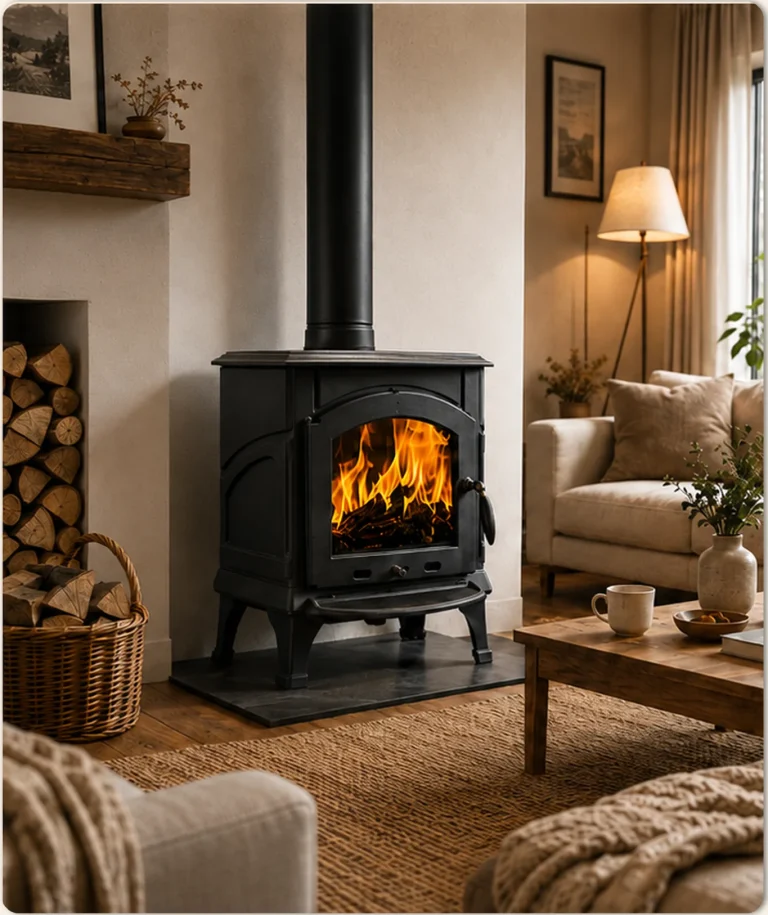
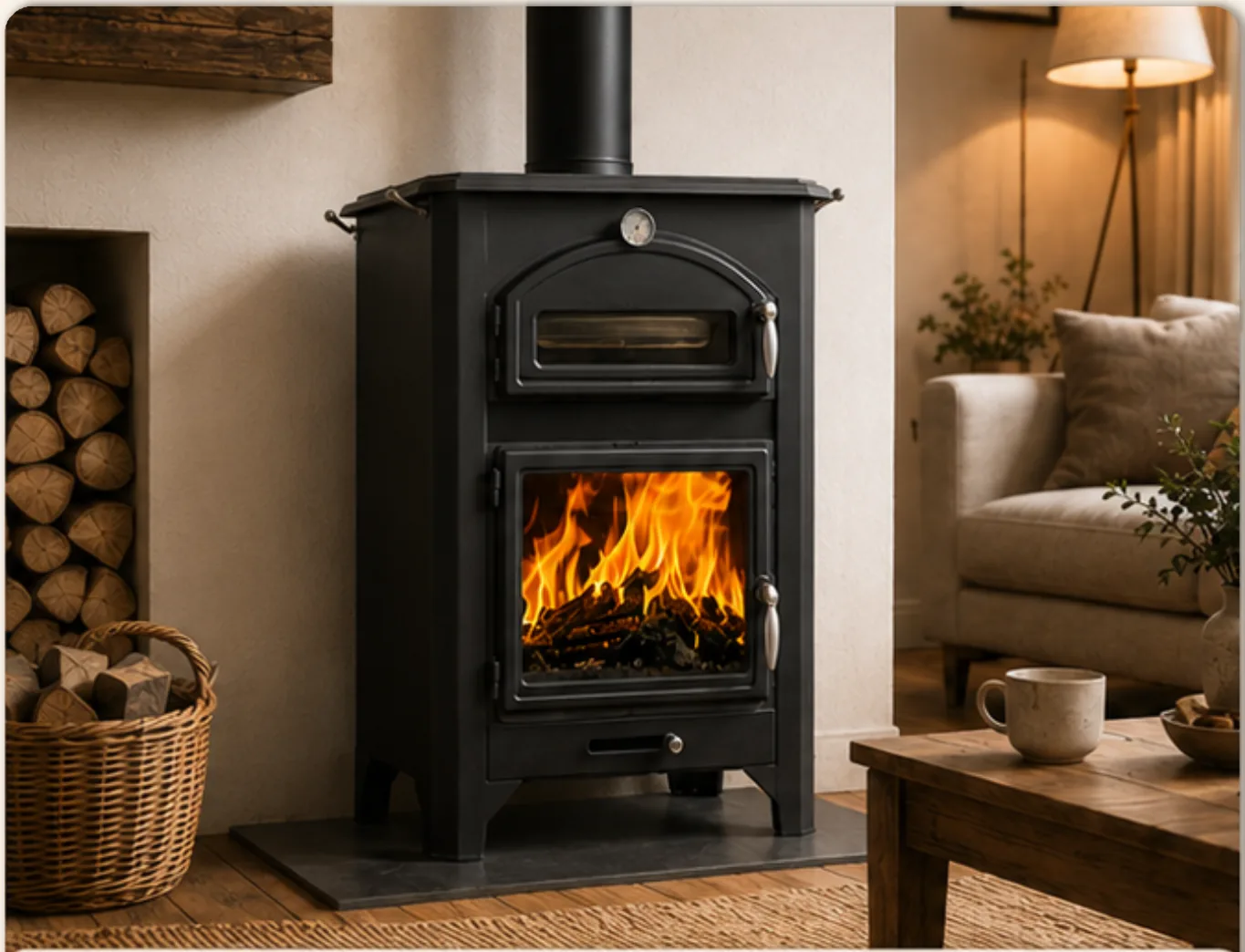
In everyday trade language, an ecodesign wood stove is a solid fuel appliance that meets the requirements of the EU Ecodesign Regulation for local space heaters. The term is also used in the UK, where the same requirements were kept after Brexit. It covers efficiency, emissions and the product information the manufacturer must supply. An ecodesign wood stove can burn logs, briquettes or pellets, as long as the tested fuel matches the fuel stated in the manual.
It is not a single certificate or a logo. Compliance is shown through test reports, technical documentation and the information in the manual and product fiche. That distinction matters for anyone buying an ecodesign wood stove in volume, especially when a supplier simply writes “Ecodesign” in a catalogue without offering any documents to back it up.
EU Ecodesign Regulation (EU) 2015/1185
The core text is Commission Regulation (EU) 2015/1185, which sets ecodesign requirements for solid fuel local space heaters with a nominal heat output of 50 kW or less. It has applied since 1 January 2022 to appliances placed on the market from that date. It covers open-fronted and closed-fronted heaters, pellet heaters and cookers.
Two groups of requirements apply. The first is a minimum seasonal space heating efficiency. The second is a set of emission limits for particulate matter (PM), organic gaseous compounds (OGC), carbon monoxide (CO) and nitrogen oxides (NOx). Emission limits are expressed at 13 % oxygen.
| Appliance type | Min. seasonal efficiency | PM | OGC | CO | NOx (biomass) |
|---|---|---|---|---|---|
| Closed-fronted, wood logs | 65 % | 40 mg/m³ | 120 mg/m³ | 1,500 mg/m³ | 200 mg/m³ |
| Closed-fronted, wood pellets | 79 % | 20 mg/m³ | 60 mg/m³ | 300 mg/m³ | 200 mg/m³ |
| Open-fronted | 30 % | 50 mg/m³ | 120 mg/m³ | 2,000 mg/m³ | 200 mg/m³ |
| Cookers | 65 % | 40 mg/m³ | 120 mg/m³ | 1,500 mg/m³ | 200 mg/m³ |
The regulation also allows particulate matter to be measured by alternative methods, with different limit values for each method. Always read the annexes of the official text rather than a summary table, including this one, before you rely on a figure.
Note that these are minimum values. An ecodesign wood stove that only just passes in the laboratory may struggle in national schemes with tighter limits, so many brands aim for a clear margin below each threshold.
Product information and energy label
Ecodesign is not only about numbers in a lab. The manufacturer must provide technical information in the manual, on free-access websites and in the technical documentation, including efficiency, emissions and fuel data. Separately, Regulation (EU) 2015/1186 requires an energy label for local space heaters, which has applied since 2018.
Testing standards: EN 13240, EN 13229, EN 14785 and EN 16510
For years, wood stoves in Europe were tested to product standards such as EN 13240 for roomheaters, EN 13229 for inset appliances and open fires, EN 12815 for cookers and EN 14785 for pellet appliances. These standards define safety requirements and test methods for heat output, efficiency and emissions.
The newer EN 16510 series is replacing them. EN 16510-1 sets general requirements, and further parts cover specific appliance types. The old and new standards have coexisted during a transition period whose dates depend on publication of references in the Official Journal of the EU. Ask your supplier which standard each test report for an ecodesign wood stove uses and check the current transition dates.
For an importer, the practical point is simple: a test report to an older standard may remain valid for products already on the market, but new listings and new models should be checked against the current harmonised standard.
CE marking and the Declaration of Performance
Wood stoves are construction products in the EU. Under the Construction Products Regulation (EU) No 305/2011, a stove covered by a harmonised standard needs a Declaration of Performance (DoP) and a CE marking. The DoP lists essential characteristics such as fire safety, emissions, efficiency and surface temperatures, based on tests by a notified body.
A revised Construction Products Regulation was adopted in 2024 and phases in over several years. Its transition arrangements are detailed, so confirm which rules apply to your products with your notified body or national authority.
An ecodesign wood stove sold in the EU therefore normally carries three layers of evidence: the ecodesign test results, the CE marking with its DoP, and any national approvals. Missing one of them can block a sale or an installation. Keep a complete file for every ecodesign wood stove you list, because market surveillance authorities may ask for it years after the sale.
United Kingdom: Ecodesign and smoke control areas
Great Britain kept the Ecodesign requirements in domestic law, so an ecodesign wood stove sold there must meet the same efficiency and emission limits from 1 January 2022. Northern Ireland follows EU product rules under its own arrangements. Product marking rules (UKCA and CE) have changed several times, so check current government guidance.
Smoke control areas add a second layer. In these areas, only approved fuels may be burned unless the appliance is an exempt appliance, often called a DEFRA-exempt stove. Rules, fines and the lists of exempt appliances are published by government; start with the UK smoke control area rules.
For UK distributors, the commercial message is clear: in many urban areas, a model without exemption is much harder to sell. Ask early whether the supplier can support an exemption application, and budget the time it takes. An ecodesign wood stove without exemption may still sell well in rural areas outside smoke control zones.
Germany: 1. BImSchV Stufe 2
Germany regulates small combustion installations through the First Ordinance implementing the Federal Immission Control Act, known as the 1. BImSchV. Its Stage 2 limits apply to stoves installed after 31 December 2014. For log-burning roomheaters, the commonly cited Stage 2 limits are 1.25 g/m³ for CO and 0.04 g/m³ for dust, at 13 % oxygen.
The ordinance also sets retrofit or replacement deadlines for older stoves, staggered by the date on the type plate. Stoves from 1995 up to 21 March 2010 that do not meet the limits had to be upgraded or taken out of use by the end of 2024. Exceptions exist, for example for some cookers and for open fireplaces used only occasionally.
In practice, the chimney sweep (Schornsteinfeger) checks compliance at installation. German dealers usually expect a manufacturer’s certificate confirming the limits, plus the test report. Some regions and cities apply stricter local rules.
Because the Stage 2 CO limit is stricter than the EU figure and test conditions can differ, an ecodesign wood stove is not automatically accepted in Germany. Ask the supplier for evidence against both sets of requirements.
France: the Flamme Verte label
France applies EU Ecodesign, but the market also relies heavily on Flamme Verte, a voluntary quality label for wood and pellet appliances. It uses a star rating based on efficiency and emissions; the required levels have been raised over time, and older star ratings have been phased out for new labelling.
Flamme Verte, or equivalent performance, has often been referenced by French renovation subsidy schemes. Because subsidy rules change frequently, check the current conditions before promising a client any grant. Labelling is applied for by the manufacturer or brand owner, on the basis of test results, so a Flamme Verte listing is a useful extra proof that an ecodesign wood stove performs well.
United States: EPA 2020 NSPS Step 2
In the US, residential wood heaters are regulated by the EPA New Source Performance Standards. Since May 2020, Step 2 limits apply to new room heaters: 2.0 g/h of particulate matter when tested with crib wood, or 2.5 g/h when tested with cord wood. Pellet stoves are covered as well.
European test results are not accepted in place of EPA certification. An ecodesign wood stove designed for Europe usually needs a separate US test programme, often with design changes, a different flue collar and a US-specific manual. Plan for that cost and time before you add North America to your plans.
Models must be tested by an EPA-accredited laboratory and certified before sale; certified models appear in EPA’s public database. Safety listing, for example to UL 1482 for solid fuel room heaters, is normally required by building codes and insurers. The EPA Burn Wise programme is the best starting point. Some states and local air districts add their own rules.
Ecodesign wood stove rules by market: summary
The table below gives an overview of each market. It is a simplification; local and regional rules can be stricter, and exceptions are common.
| Market | Main rules | Typical evidence | Points to watch |
|---|---|---|---|
| EU | Ecodesign (EU) 2015/1185, CPR | Test report, DoP, CE marking, product fiche | EN 16510 transition |
| UK | Ecodesign (retained), Clean Air rules | Test report, marking per current guidance | Smoke control exemption |
| Germany | 1. BImSchV Stufe 2 plus Ecodesign | Manufacturer certificate, test report | Sweep acceptance, local rules |
| France | Ecodesign plus Flamme Verte (voluntary) | Test report, Flamme Verte listing | Subsidy conditions |
| USA | EPA NSPS Step 2 | EPA certification, safety listing | State and local rules |
What importers should request from an ecodesign wood stove supplier
Whether you source an ecodesign wood stove from Europe or from Asia, ask for documents before you ask for prices. A serious manufacturer can show them quickly. If you are new to sourcing, our guide on how to import wood stoves from China walks through the full process.
- Test reports from a notified body or accredited laboratory, naming the exact model, the standard and the test date.
- Declaration of Performance matching the model and the harmonised standard.
- CE label artwork and the rating plate, including model, serial number and key data.
- Product fiche and technical information required by Ecodesign and energy labelling.
- Installation and user manuals in the language of each target market.
- National documents where relevant, such as a BImSchV certificate or a Flamme Verte listing.
- Change control: confirmation that the production model matches the tested model.
Check that the brand name on the documents matches your plans. If you sell under your own brand, the paperwork has to reflect that. Our OEM and private label programme explains how documentation is handled for branded ranges.
Red flags in compliance paperwork
- A report for a different model “from the same family” without a clear explanation.
- Reports with no laboratory accreditation or notified body number.
- Values in a catalogue that do not appear in any report.
- A supplier who cannot say which standard was used.
- Manuals only in Chinese or poor machine translation.
Planning an ecodesign wood stove range: a realistic timeline
Compliance work takes time, and the heating season does not wait. If you plan to launch new models for autumn, start the document review in winter. Testing a new or modified model at a laboratory can take several months, depending on the laboratory’s workload and whether retests are needed.
- Months 1–2: agree target markets and shortlist models with existing test reports.
- Months 2–3: review reports, DoP and manuals; ask for corrections or translations.
- Months 3–5: arrange extra testing or national approvals where required.
- Months 5–6: confirm rating plates, labels and packaging, then release the production order.
Using models that already have reports is the fastest route. Any change to the firebox, air system or door design can affect results, so discuss branding changes with the supplier before you assume the existing reports still apply.
Pellet stoves versus log stoves under Ecodesign
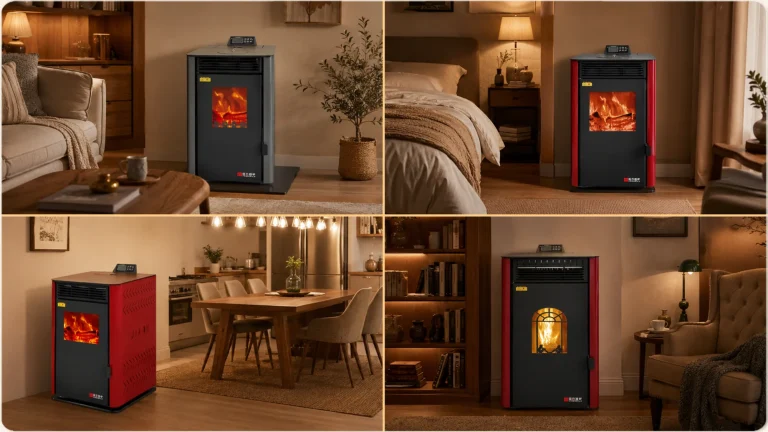
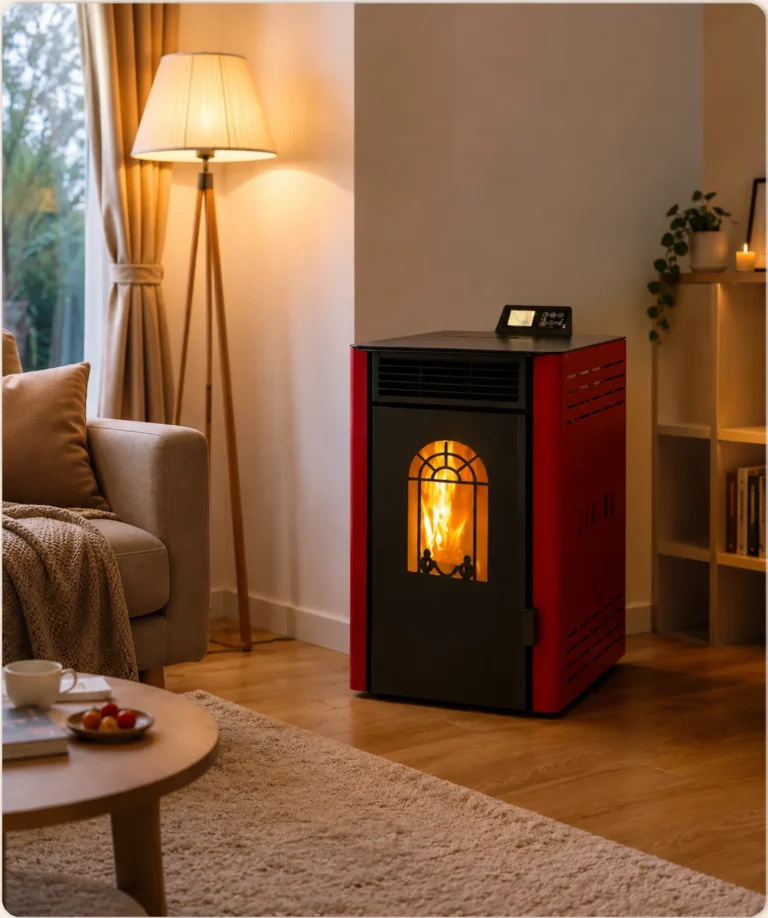
Pellet appliances face tighter emission limits and a higher efficiency threshold than log stoves, because automatic fuel feed and controlled combustion make cleaner burning achievable. For a range planner, that means a pellet model and an ecodesign wood stove need separate test programmes and separate paperwork. Our article on pellet stoves vs. wood stoves covers the commercial side.
How CREPUS handles documentation
CREPUS manufactures wood stoves, inset fireplaces and pellet stoves for distributors and OEM brands. Test reports and declarations for relevant standards (e.g. EN 13240, EN 13229, EN 14785) are available on request for qualified models. Tell us which markets you plan to serve, and we will tell you which models and documents fit.
Answers to common questions about samples, lead times and paperwork are on our FAQ page. Whatever supplier you choose, compare every claim with the current official texts. An ecodesign wood stove is only as compliant as the evidence behind it, and a good supplier will help you build that file.
Frequently asked questions
Is every wood stove sold in the EU an ecodesign wood stove?
Every solid fuel local space heater placed on the EU market since 1 January 2022 must meet Regulation (EU) 2015/1185. Stoves already on the market before that date could still be sold. In practice, new stock should comply, and importers should ask for test reports and a Declaration of Performance to confirm it rather than relying on catalogue wording.
Is EN 16510 replacing EN 13240?
Yes, the EN 16510 series is replacing older product standards such as EN 13240, EN 13229, EN 12815 and EN 14785. They have coexisted during a transition period tied to publications in the Official Journal of the EU. Check the current status and ask your supplier which standard each test report was made to before listing a model.
Does Ecodesign make a stove DEFRA-exempt in the UK?
No. Ecodesign compliance and smoke control exemption are separate. In smoke control areas, a stove burning wood must be an exempt appliance unless an approved fuel is used. Exemption is granted per model through a government process. Check the current UK smoke control rules and the official list of exempt appliances before selling into these areas.
Which documents should I request before importing stoves?
Ask for test reports from a notified body or accredited laboratory, the Declaration of Performance, CE label and rating plate artwork, the Ecodesign product information, and manuals in your local language. For Germany, request a 1. BImSchV certificate; for France, check Flamme Verte status. Make sure each document names the exact model you plan to sell.