Knowing how to size a wood stove is the single most important skill in a successful stove sale. The right size burns cleanly, keeps the glass clear and heats the room the customer actually lives in. The wrong size leads to complaints, call-backs and a stove that never feels quite right. This guide gives retailers and installers a simple three-step method for how to size a wood stove: heating area, layout and chimney.
In this article
Why how to size a wood stove matters
Oversizing: the most common mistake
Customers often think bigger means safer. In reality, an oversized stove quickly makes the room too hot, so the owner closes the air controls to slow it down. Starved of air, the fire smoulders. The result is sooty glass, a dirty firebox, poor combustion and creosote building up in the flue, which raises the risk of a chimney fire.
Undersizing: cold rooms and overfiring
An undersized stove struggles on cold days. The owner overloads it and runs it at full air for hours. That overfiring stresses grates, baffles, liners and seals, shortens their life and can damage the stove body. The customer still feels cold and blames the product. Learning how to size a wood stove properly prevents both problems.
Step 1: heating area and insulation
Every method for how to size a wood stove begins with the space. Get this step right and the next two become refinements rather than corrections.
Start with the floor area the stove must heat, in square metres. Measure the room, or the connected rooms that will share the heat. Every CREPUS model lists a heating area range, for example 80–100 m². That range assumes typical ceiling heights; with high or vaulted ceilings, treat the space as larger than its floor area suggests.
Then adjust for insulation. Use the lower value of the range for older, poorly insulated houses with single glazing or draughty floors. Use the upper value for modern, well-insulated homes. A renovated farmhouse and a new-build apartment of the same size can need very different stoves. If the home has had a professional heat-loss assessment, use it; it is more precise than any rule of thumb about how to size a wood stove.
Sizing table: room size to CREPUS model
This table shows how to size a wood stove against our current range. The figures are the published heating areas for each model; they are a starting point, not a heat-loss calculation.
| Heating area | Wood stoves | Inset fireplaces | Pellet stoves |
|---|---|---|---|
| 50–60 m² | VT 1 (Vesta, cast iron) | — | — |
| 60–80 m² | VT 4 (Vesta, side-opening door) | — | — |
| 80–100 m² | VT 5 (Vesta), VS 3 (Vesper, with oven) | — | P 80, PC 80 |
| 80–120 m² | VT 2 (Vesta) | — | — |
| 100–120 m² | VT 3 (Vesta), VS 1 (Vesper) | LA 1, LA 2 | P 100, PC 100 |
| 100–150 m² | JA 2 (Janus, double-sided) | LA 3 | — |
| 120–150 m² | JA 1 (Janus, 120–140 m²) | — | PC 120 |
| 150–200 m² | VS 2 (Vesper) | LA 4 | P 150, PS 150 (150 m²) |
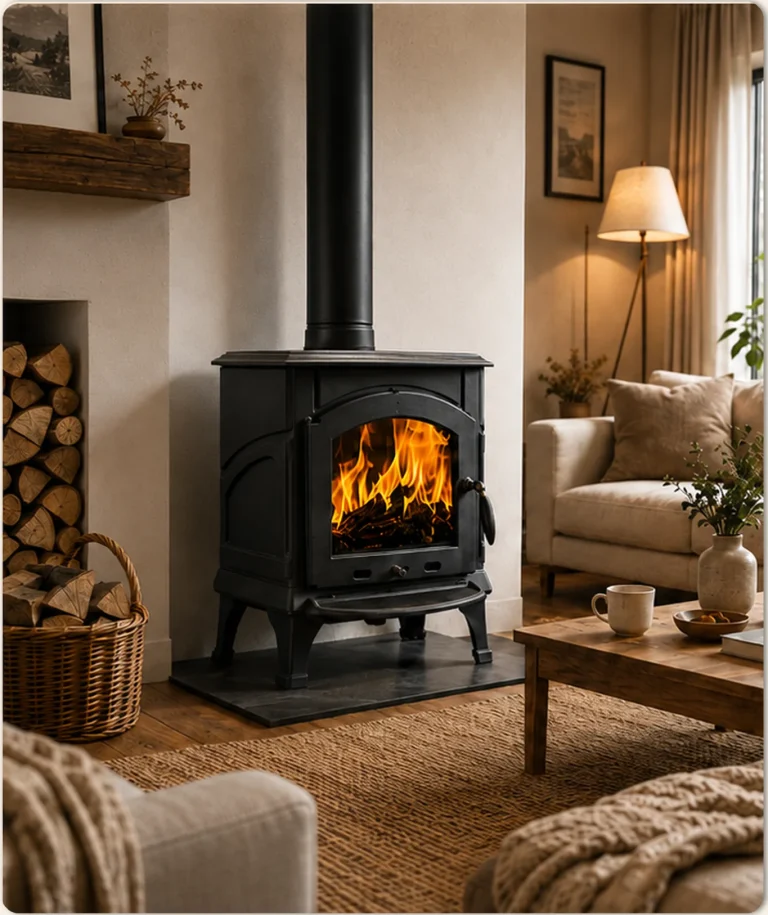
For small rooms, the VT 1 compact cast iron stove covers 50–60 m². For mid-size living rooms, the VT 5 and VS 3 cover 80–100 m². For large open spaces, the VS 2 covers 150–200 m². Browse the full Vesta cast iron collection for classic options in between.
Step 2: layout and heat distribution
Square metres alone do not tell you how to size a wood stove for a real home. Heat has to reach the places where people sit. A stove that matches the total area can still leave a distant room cold if the warm air cannot get there.
Open plan versus separate rooms
Open-plan spaces distribute heat well. Radiant heat warms the main area, and natural air movement carries warmth into connected zones. Here you can size closer to the total floor area. Separate rooms behind closed doors are different: a stove in the living room will not heat a bedroom down the corridor, so size for the room it stands in, plus any spaces that stay open to it.
Convection and inset fireplaces
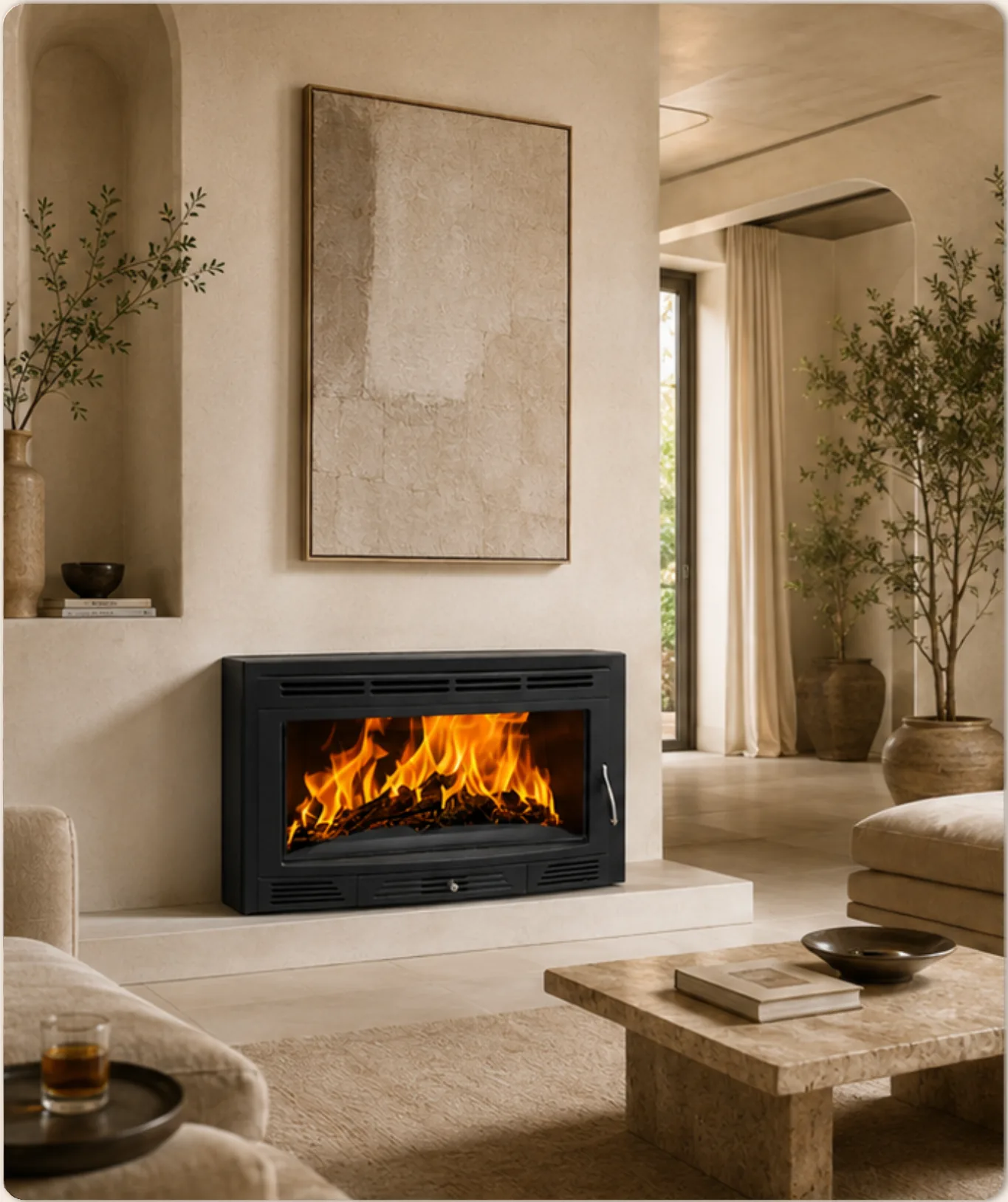
Convection moves heat further than radiation alone. Inset fireplaces, such as our Lares inset collection, sit inside a chimney breast or cladding, and warm air circulates around the firebox before entering the room. Steel stoves with convection panels work in a similar way. Both suit long rooms or spaces where radiant heat would concentrate near the stove. When you size a wood stove for an L-shaped or long room, a convection design often lets you stay with a smaller, cleaner-burning model instead of stepping up a size.
Pellet stoves with fans
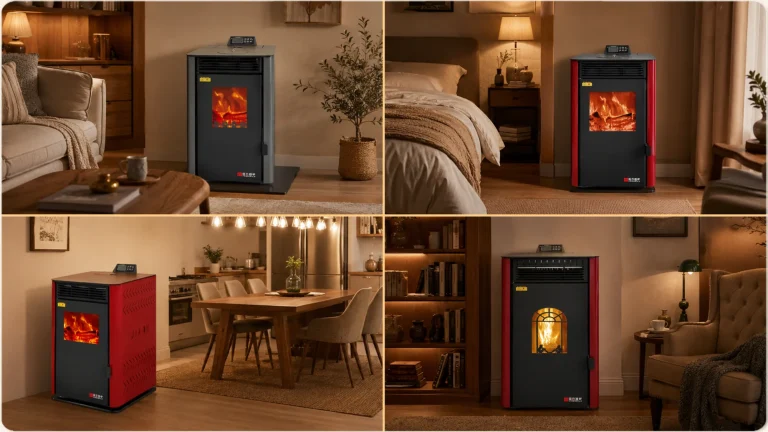
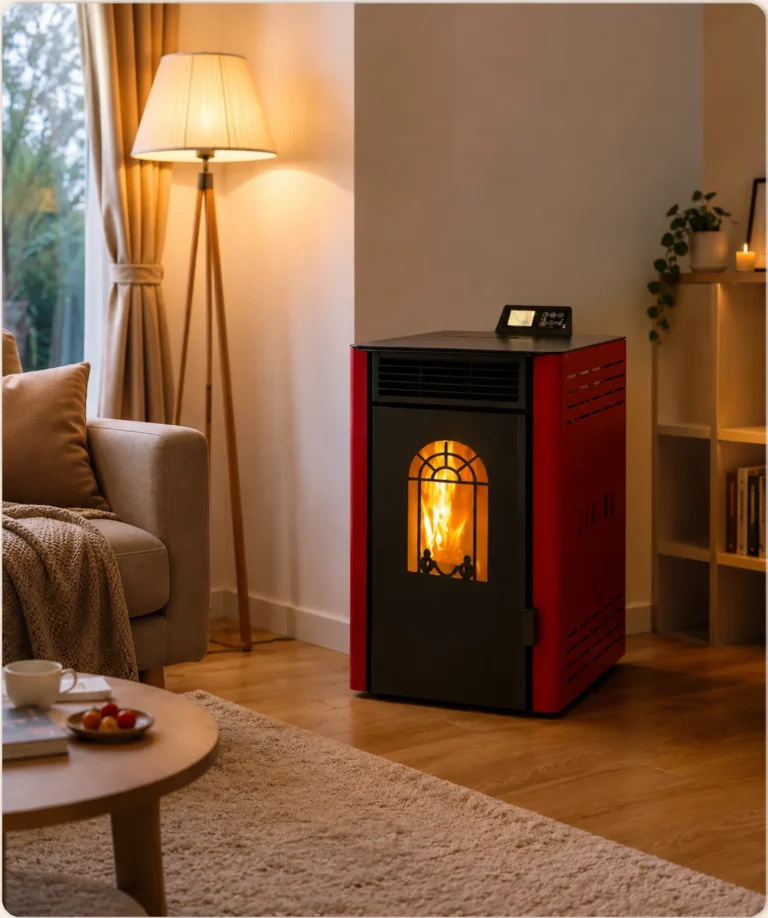
Pellet stoves use a convection fan, which pushes warm air across the room and helps in deeper or L-shaped spaces. Their thermostat also adjusts output automatically, so the oversizing problem is less severe than with logs. Even so, sizing still matters: a pellet stove running permanently at its lowest setting tends to need more frequent cleaning.
Double-sided stoves
Double-sided models such as the Janus series face two rooms or two zones. Size them for the combined area that both sides will heat, not for one room alone. They also need a wall opening and flue route planned early, so involve the installer from the first site visit.
Step 3: chimney and flue
The final step in how to size a wood stove is checking that the chimney suits it. A stove is only as good as its draught. Without enough draught, even a perfectly sized stove smokes on lighting, burns lazily and soots the glass.
Flue diameter: 150/152 mm vs 200 mm
Match the flue to the stove’s outlet. Our Vesta stoves and the VS 2 and VS 3 use a 152 mm outlet, compatible with common 150 mm flue systems where the installer confirms the fit. Janus, VS 1 and Lares models use 200 mm. As a general rule, the flue should not be reduced below the stove’s outlet diameter unless the manufacturer and local rules allow it.
Draught and chimney height
Draught depends on chimney height, the flue’s internal size, insulation, bends and the position of the chimney top relative to the roof and nearby buildings. A tall, warm, straight flue draws well. A short, cold or oversized flue often draws poorly, and an existing masonry chimney may need a liner.
Minimum heights, clearances, hearth sizes and air supply rules differ by country and region. Always defer to a qualified installer and local building regulations. The installer’s chimney survey is part of how to size a wood stove, not an afterthought once the model is chosen. In the UK, for example, HETAS registers competent installers of solid fuel appliances and publishes guidance for homeowners.
Common mistakes when sizing a wood stove
Even experienced sales staff fall into these traps. Each one comes from treating the heating-area figure as the whole answer to how to size a wood stove.
- Choosing the biggest stove “just to be safe”, then running it permanently at low air.
- Sizing for the whole house when doors to other rooms will stay closed.
- Ignoring insulation: using the top of the heating-area range in a draughty old house.
- Forgetting ceiling height in barns, lofts and rooms with galleries.
- Not checking the chimney diameter, condition and height before quoting.
- Assuming a fan or convection design can fix a stove that is far too large.
- Skipping the customer’s habits: an evening fire and all-day heating need different answers.
Most of these errors come from rushing the first conversation. Ten minutes of questions save a return visit, a frustrated customer and a negative review. Getting how to size a wood stove right also builds the installer’s confidence in your advice.
How to size a wood stove: quick checklist
Use this checklist at the counter or on a site visit. It covers the essentials of how to size a wood stove in under ten minutes.
- Measure the floor area to be heated and note ceiling height.
- Rate insulation: poor, average or good. Pick the lower, middle or upper part of the heating-area range.
- Sketch the layout: open plan, connected rooms or closed rooms.
- Decide on heat style: radiant stove, convection or inset, or pellet stove with fan.
- Check the existing chimney: diameter, height, liner, condition.
- Match the stove outlet (152 mm or 200 mm) to the flue system.
- Ask about daily use: hours of burning and whether it is the main heat source.
- Confirm floor load, hearth and clearances with the installer and local rules.
Bottom line for retailers
Correct sizing is the foundation of every good stove sale. Get the heating area right, account for layout, and make sure the chimney can support the stove. The customer gets clean glass and steady warmth; you get fewer call-backs and more referrals. Train every member of the sales team on how to size a wood stove with the same three steps, and your recommendations will stay consistent from counter to installation.
Unsure which model fits a project? Send us the room size, insulation level and flue details, and our export team will suggest suitable models within one business day. For choosing a material, see our guide to cast iron vs steel wood stoves.
Frequently asked questions
How to size a wood stove for my room?
Start with the floor area you want to heat, then adjust for insulation and layout. Use the lower end of a model’s heating-area range for older, poorly insulated homes and the upper end for modern, well-insulated ones. Check that warm air can reach the rooms you need, and confirm the chimney suits the stove before you buy.
What happens if a wood stove is too big for the room?
An oversized stove makes the room too hot, so the owner closes the air controls to slow it down. The fire then smoulders, which soots the glass, dirties the firebox and builds creosote in the flue. Over time this raises the risk of a chimney fire and leaves the customer unhappy with the stove.
Does the flue diameter affect stove sizing?
Yes. The flue should match the stove’s outlet, for example 152 mm or 200 mm on CREPUS wood models, and generally should not be reduced below it. Chimney height, insulation, bends and condition all affect draught. A qualified installer should check the flue and confirm it meets local regulations before installation.
Can one wood stove heat a whole house?
Sometimes, in a compact, well-insulated, open-plan home where warm air can circulate freely. In houses with separate rooms and closed doors, a single stove mainly heats the room it stands in and the spaces open to it. Convection or inset designs and pellet stoves with fans help, but they cannot replace a full heating system everywhere.